
Find the Cheapest Flights from Kenya – Compare, Book & Fly!

Top Travel Destinations from Kenya in 2026
Effortless flight booking, unbeatable discounts, and seamless travel experiences—only on TICKETS.KE!


Welcome to TICKETS!
TICKETS.KE compares prices across hundreds of airlines and travel agencies—find the best deals instantly!
About TICKETSExplore the Best Flight Deals from Major Kenyan Airports
Compare affordable flights from Nairobi, Mombasa, and Kisumu to top international and regional destinations.

Nairobi Jomo Kenyatta
Oct 2026
Nonstop
One Way
Mombasa
Oct 2026
From
KSh6K
Nairobi Jomo Kenyatta
Oct 2026
Nonstop
One Way
Eldoret
Oct 2026
From
KSh7K
Nairobi Jomo Kenyatta
Oct 2026
Nonstop
One Way
Kisumu
Oct 2026
From
KSh8KNairobi Wilson
Oct 2026
Nonstop
One Way
Kitale
Oct 2026
From
KSh8KNairobi Jomo Kenyatta
Oct 2026
Nonstop
One Way
Lodwar
Oct 2026
From
KSh8KNairobi Wilson
Oct 2026
Nonstop
One Way
Ukunda
Oct 2026
From
KSh8KNairobi Jomo Kenyatta
Oct 2026
Nonstop
One Way
Malindi
Oct 2026
From
KSh9KNairobi Jomo Kenyatta
Oct 2026
Nonstop
One Way
Lamu
Oct 2026
From
KSh9KNairobi Wilson
Oct 2026
1+ Stops
One Way
Vipingo Airstrip
Oct 2026
From
KSh10K
Nairobi Wilson
Oct 2026
Nonstop
One Way
Wajir
Oct 2026
From
KSh19KFly from Kenya to Africa, Europe, Asia & Beyond
Get exclusive flight deals from Kenya to your dream destinations, all with seamless booking on TICKETS.KE!






Affordable Flights to Top Global and Regional Destinations
From Nairobi to New York, Mombasa to Dubai—find the lowest fares for your next adventure with TICKETS.KE!


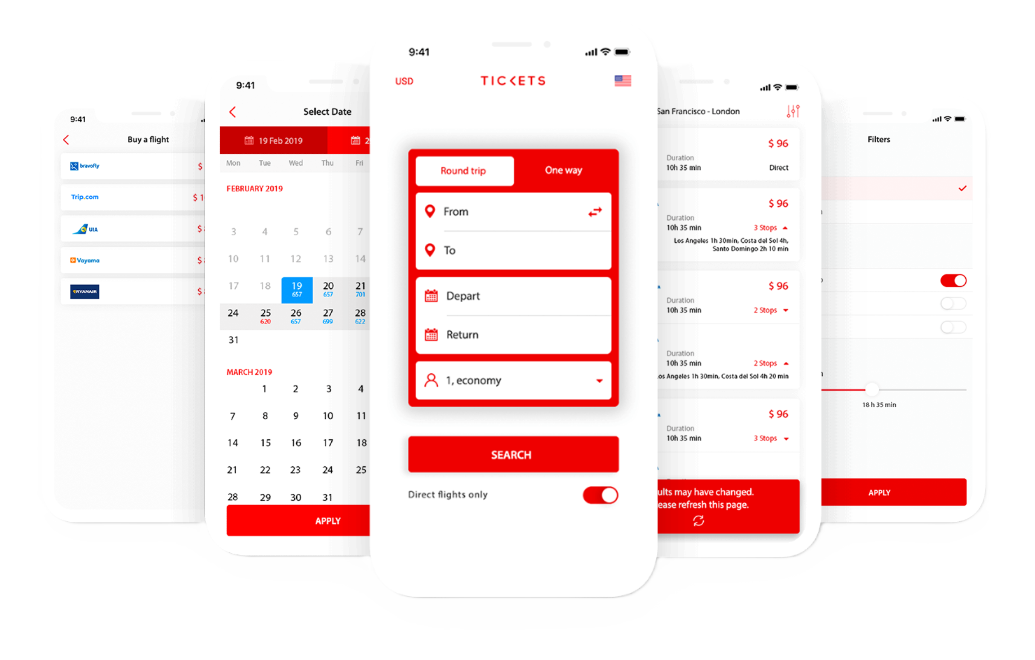
Find the best flight deals effortlessly with TICKETS! Compare ticket prices from top airlines and trusted providers to secure unbeatable fares on local and international flights. Your seamless booking experience starts here — fast, reliable, and tailored for travelers.
Cheap Flights from Kenya: When to Actually Book to Get the Lowest Fare (Nairobi & Beyond)
How early should I book to land the cheapest flight from Kenya?
For cheap flights on short regional hops around East Africa, like Nairobi to Mombasa, Kisumu or Zanzibar, aim to book roughly one to two months ahead, with about six weeks out being the sweet spot. Booking too far in advance often costs more on these nearby routes, so the old "book as early as you possibly can" advice doesn't really hold for short trips out of Nairobi. Long-haul flights from Kenya to the Gulf, Europe or Asia, such as Nairobi to Dubai or London, need a longer runway of a few months, and busy stretches like the July to October safari season or the December festive rush need even more lead time. A single fare shifts many times before departure, so trying to pin down one perfect day to buy is a losing game. Set a route alert and let the TICKETS app push you when the price actually moves. The one rule that always pays off here: don't leave a Kenya flight booking to the final couple of weeks, when fares climb fastest.
So when is the actual cheapest time to book a flight out of Kenya?
Out of Nairobi, the moment seats first go on sale is one of the priciest times to buy, not the cheapest, since the real low only lands later. Fares tend to sit high in the very-early window, ease down to a low around six weeks before departure, then climb steadily as the plane fills up. Both extremes, far-too-early and last-minute, cost you, and the best value on a Kenyan route sits in the middle. The exception is long-haul travel from Nairobi, like flights to Dubai or London, plus peak seasons, when seats genuinely sell out, so booking a few months ahead protects both your price and your seat. For a short, off-peak trip there's no need to rush; for a long or busy one, lock it in sooner. Rather than guess where your particular route falls, let the book-now-or-wait read on TICKETS.KE weigh about 12 months of price history and tell you whether to buy now or hold on.
Which day of the week is genuinely cheapest to fly from Nairobi, and does it matter?
Out of Nairobi, midweek is where the lowest fares sit, and Sunday is the one day you'll want to steer clear of. Tuesday and Wednesday usually sit lowest, while Sunday is often the dearest day to depart. The best weekday shifts with the route and season, so treat "mid-week, not Sunday" as the rule rather than chasing one magic date. The saving is slim on a cheap regional hop like Nairobi to Mombasa and far more worthwhile on a long-haul flight to Europe or the Gulf, where shifting off the weekend can shave a real amount in KES per person. One thing to keep straight: this is about the day you fly, not the day you buy. The old "book on a Tuesday" tip is dead, because fares now refresh continuously rather than once a week. For the cheaper stretches across the calendar, the month price view in the date picker points you to the low months; the mid-week rule sorts out the day.
Why is a split round trip sometimes cheaper than any single airline's fare?
Price the two halves of the trip on their own and you'll sometimes find the cheapest leg out and the cheapest leg back from Nairobi sit with rival airlines, together beating any single carrier's published return fare. On every round-trip search, TICKETS.KE also prices the outbound and the return separately, then pairs the cheapest leg out with the cheapest leg back into a single "mash-up" result. We only surface that mash-up combo when it genuinely beats the best normal round trip, with the saving shown right there in KES; if a standard return ties or wins, that's what you see instead. The catch is that a mash-up is two separate tickets and two confirmations, so you'll want to open both booking pages before you pay for either. We flag the combo clearly so you know exactly what you're booking, and the maths only stacks up when the gap between the two prices is real.
Should I just book two one-ways instead of a return from Kenya?
On a route out of Nairobi, splitting the trip into two one-ways can land cheaper than a single return, and you don't have to dig for it yourself, because every round-trip search on TICKETS.KE already tests this for you. When the cheapest flight out and the cheapest flight back sit on different airlines, two one-ways can total fewer shillings than any single return fare. We pair them into one mash-up result, but only show it when it beats the best standard round trip, with the saving displayed. The trade-off is purely logistical: a mash-up is two separate tickets on two airlines. You confirm each leg on its own, and you collect and re-check your bags at the changeover rather than having them through-checked. For a simple there-and-back with hand luggage, that's usually no bother; with tight connections or checked bags, weigh the KES saving against the extra hassle.
If my travel dates can move, how much is that flexibility really worth?
Loosen your grip on the calendar and you gain more on a cheap flight from Kenya than any other single move buys you, because flexibility lets you stack savings instead of leaning on one trick. Shift from a weekend to mid-week, then slide into a cheaper off-peak month, and the two combine into a real cut off a peak-weekend fare. The quieter shoulder periods are the heavy lever on their own: around here the long-rains stretch from March to May and the calmer weeks of late January and February usually run well below the July-to-October safari peak or the December festive rush, so a Nairobi–Mombasa or Nairobi–Kisumu hop tends to be cheaper then. Which months are cheapest shifts by route, region and hemisphere, but "avoid the obvious peaks" holds almost everywhere out of Nairobi. Picking the perfect weekday, by contrast, saves little on a cheap route. That's why a whole-month view beats checking one date at a time: on TICKETS.KE the date picker shows an indicative cheapest fare per month across several months, so the low-price months stand out at a glance, then the results page shows the live bookable fare in KES.
Is it worth flying from a different airport in Kenya to save money?
Start by mapping out what Kenya actually gives you to choose from. In some markets budget carriers cluster at cheaper secondary airports, and the lower fees show up in the fare, but for international travel out of Nairobi that doesn't apply, since Jomo Kenyatta International (JKIA) is the single main gateway and there's no cheaper secondary international airport to switch to. Where this idea does matter is if you live closer to another city's airport, say Mombasa for a regional route, or if a connection through a different hub works out cheaper. Either way, the catch is door-to-door cost: a lower fare only really wins once you add transport, time and the hassle of getting there. TICKETS.KE detects the airport nearest you, and you can set your home airport by hand. There's no automatic radius search bundling nearby airports into one query, so to test another origin you set it yourself and compare. The destination map is the quicker way to scan prices from your area across several targets. Bottom line: compare the total trip cost in KES, not just the headline fare.
Is a cheaper self-transfer flight worth the missed-connection risk?
Out of Nairobi, a self-transfer (virtual interlining) fare trims the price by trimming your protection — the cover is now on you, not the airline. The format stitches two separate tickets, often on airlines with no agreement between them, into one journey, so nothing protects the link between the legs. The real risk is the connection. If your first leg out of Nairobi runs late and you miss the second, that airline owes you nothing, you're counted a no-show, and you may have to buy a fresh ticket. You also collect and re-check your own bags between legs, and any compensation is judged per ticket. So price the downside, not the headline fare: leave a generous layover, a few hours with hand luggage and longer with checked bags or an airport change, and think about missed-connection cover. TICKETS.KE surfaces these self-transfer options with a clear warning, and the route map flags every airport change so you decide with your eyes open.
Are flight price alerts worth setting for Kenyan routes, or are they just noise?
On a Nairobi route, a route alert reacts to the drop for you — it never claims to know the fare before it falls. A fare moves many times before departure, so a route alert through the TICKETS app keeps watch and pushes you a notification the moment the price actually drops, which turns timing into a simple rule instead of a guessing game. Set it, then buy in the cheap window or on a genuine dip. Alerts pay off most when your dates are flexible, you're booking well ahead, or you're tracking long-haul routes that swing the hardest, like Nairobi to Europe or the Gulf. The blind spot: a flash fare can disappear before any alert fires. If you'd rather see the trend than a single ping, the book-now-or-wait read scores roughly a year of price history as buy, wait or neutral. Price alerts are free, and they come as a push notification in the TICKETS app, not on the website.
Will this Kenya fare drop, or should I just book now?
Today's price on a Nairobi–Dubai run says little until you stand it next to that route's own 12-month history — and standing the two side by side is exactly what the book-now-or-wait tool on TICKETS.KE does. Feed it a route like Nairobi to Dubai and it returns one of three calls, buy now, wait, or neutral, each with a confidence score, the cheapest and most expensive months, and whether the trend is rising, falling or stable. The rule that tracks the data: inside the cheap window, roughly six weeks out for short-haul and a few months for long-haul, and at or below the route's typical level, go ahead and book. Early in the cycle with prices running high for the season, holding on can pay off. The strongest signal is also the simplest one: don't leave a Kenya flight to the final two weeks, when fares climb fastest. Still on the fence? Set a route alert in the TICKETS app and let the price movements decide for you.
What's the cheapest time of year to book flights from Kenya?
In Kenya the calendar, not the clock, drives your fare: the lowest prices land in the quiet shoulder months between the big peaks, and getting that timing right matters far more than which weekday you choose. Out of Kenya the lows tend to fall in the late January and February lull, once the festive crowds have cleared, and again during the long-rains stretch from March to May when fewer people are travelling. The expensive windows are the July to October safari high season, when the Maasai Mara migration draws the crowds, and the late-December festive period. It flips by route and region, a southern-hemisphere summer or a local festival can turn it upside down, but "skip the obvious safari and festive peaks" holds almost everywhere from Nairobi. On TICKETS.KE the date picker's month price view shows an indicative cheapest fare per month across several months, so the cheaper stretches are easy to spot; then the results page shows the live bookable fares in KES.
What's the cheapest time of year to book flights from Kenya?
In Kenya the calendar, not the clock, drives your fare: the lowest prices land in the quiet shoulder months between the big peaks, and getting that timing right matters far more than which weekday you choose. Out of Kenya the lows tend to fall in the late January and February lull, once the festive crowds have cleared, and again during the long-rains stretch from March to May when fewer people are travelling. The expensive windows are the July to October safari high season, when the Maasai Mara migration draws the crowds, and the late-December festive period. It flips by route and region, a southern-hemisphere summer or a local festival can turn it upside down, but "skip the obvious safari and festive peaks" holds almost everywhere from Nairobi. On TICKETS.KE the date picker's month price view shows an indicative cheapest fare per month across several months, so the cheaper stretches are easy to spot; then the results page shows the live bookable fares in KES.